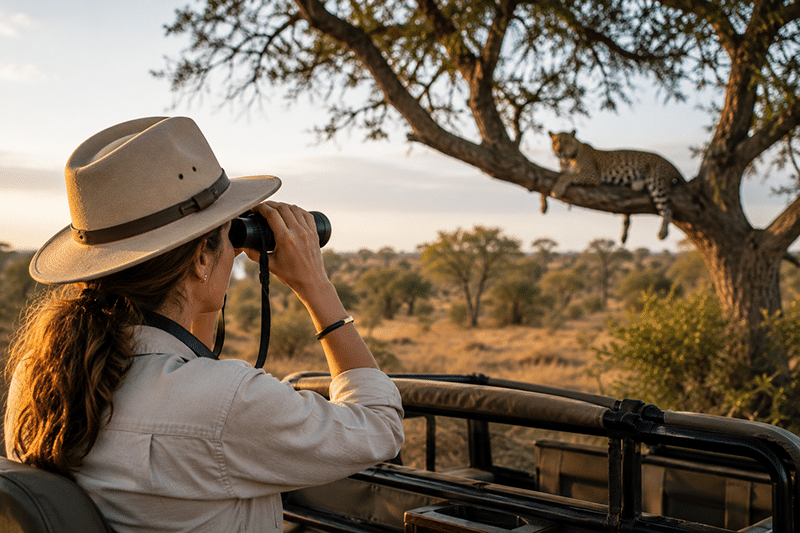
Botswana is one of Africa’s most compelling safari destinations — a place of vast landscapes, rich wildlife, and rhythms shaped by seasons and water. Choosing when to visit doesn’t come down to a single “best” time, but rather to what you hope to experience.
In this guide, we explore seasonal patterns, wildlife behaviours, and climate considerations so you can make an informed decision that aligns with your interests and travel style.
Understanding Botswana’s seasons
Unlike some travel destinations, Botswana’s seasons aren’t defined by temperature alone. Here, water and dryness drive the wildlife experience.
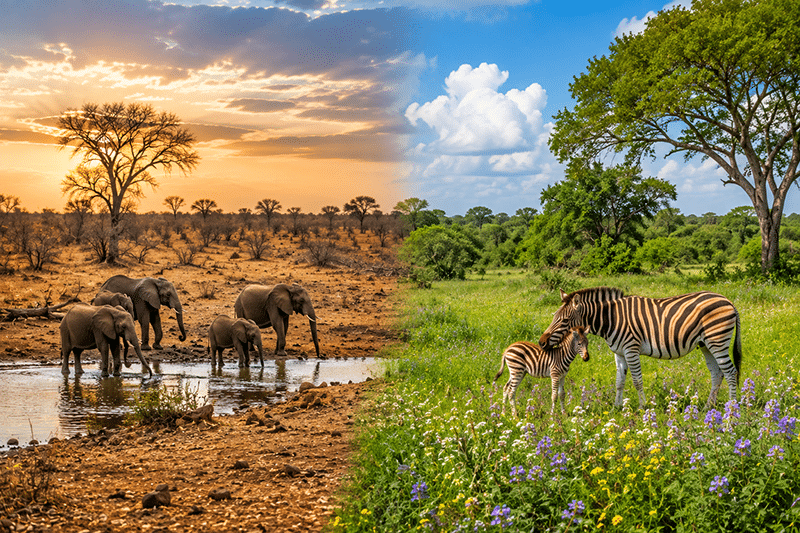
• The Wet Season (November to March)
During the wet months, rain transforms the landscape:
- Grasses are lush and green
- Migratory birds arrive in abundance
- Calving season for many species
- Waterholes form in new places
Wildlife spreads out across the plains, and while this can make sightings more diffuse, birdlife and dramatic green scenery make this time especially rewarding for photographers and nature lovers.
• The Dry Season (April to October)
As the rains recede:
- Water concentrates in key areas
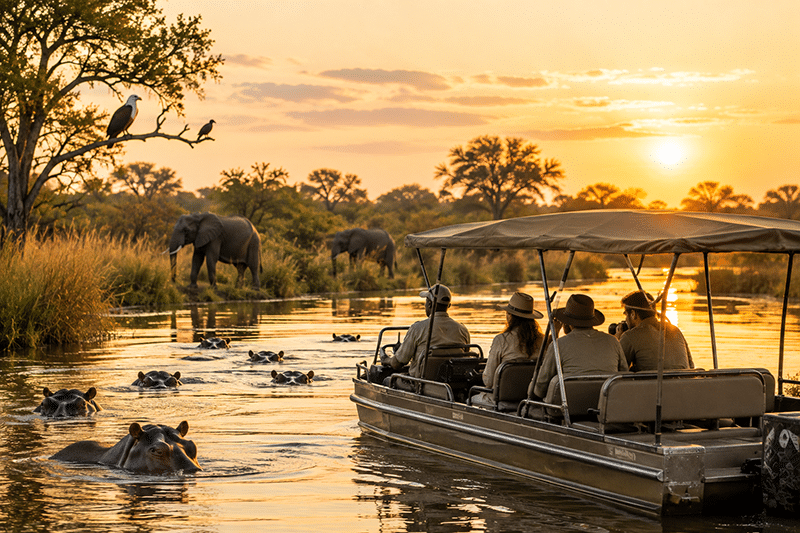
- Wildlife gathers at permanent water sources
- Game viewing becomes more predictable
Many travellers favour this period because animals are easier to locate and observe. Early mornings and late afternoons can be crisp, while midday remains warm and pleasant.
When to visit based on what you want to experience
For Classic Game Viewing
May to September usually offers the most consistent sightings, as wildlife congregates around rivers and waterholes.
For Birdwatching and Life in the Bush
November to March brings migrating birds, fledglings, and lush habitat — ideal for those who enjoy quieter, nuanced wildlife moments.
For Photography & Scenery
Both seasons offer unique visual rewards — green, dramatic skies in the wet months, and clear, golden light in the dry season. If photography is a focus, consider how your priorities align with these contrasts.
Seasonal highlights at a glance
- Early Dry Season (April–June): Transition period with comfortable temperatures and increasing visibility.
- Peak Dry Season (June–August): Most reliable for wildlife encounters at concentrated water sources.
- Late Dry Season (September–October): Animal behaviour can be intense and active.
- Wet Season (November–March): Vibrant landscapes, birdlife riches, and dramatic skies.
Regional variations
Botswana’s geography — from the Okavango Delta to the Central Kalahari — creates micro-climates and unique wildlife patterns. Travel planning takes these variations into account so you experience the areas at their very best.
Experienced guides track seasonal movement year after year, and this local insight allows you to visit the right places at the right time.
How we help you choose
Rather than recommending a single “best time,” we help you choose a meaningful time — one that aligns with:
- What wildlife you most want to see
- Whether you prefer lush landscapes or concentrated sightings
- Your comfort with heat, rain, or dry plains
- Your tolerance for crowds versus quiet solitude
A thoughtfully timed safari feels effortless and rewarding because the land itself seems to open up to you.
There isn’t one perfect time to visit Botswana. There’s a right time for you — based on the experience you seek.
Whether you’re drawn to abundant birdlife, dramatic wildlife gatherings, or the rich colours of the green season, Botswana offers remarkable encounters all year long.
If you’d like help selecting dates that align with your interests and expectations, we’d be happy to guide you.