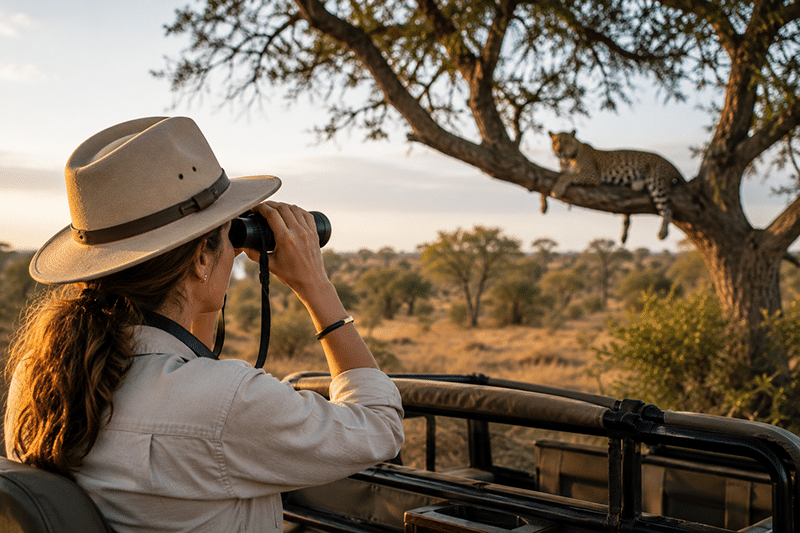
To many first-time safari travellers, the African wilderness appears peaceful and quiet. But for experienced guides, the bush is constantly communicating. Every sound, movement, footprint, and bird call provides clues about what is happening beyond sight.
Learning to “read the bush” is one of the most fascinating aspects of safari. It transforms every game drive into a detective story, where seemingly small details reveal extraordinary wildlife encounters.
Whether exploring Botswana, South Africa, or Zimbabwe, understanding the language of the bush offers a completely new appreciation of Africa’s wilderness.
Alarm calls reveal hidden predators
Many animals act as the bush’s early warning system.
Impalas snort loudly when they detect danger, vervet monkeys produce different alarm calls for leopards, eagles, and snakes, while birds such as hornbills and francolins often react to approaching predators.
Experienced guides immediately recognise these signals and know where to begin looking.
Birds often know first
Birds are some of the best wildlife spotters in Africa.
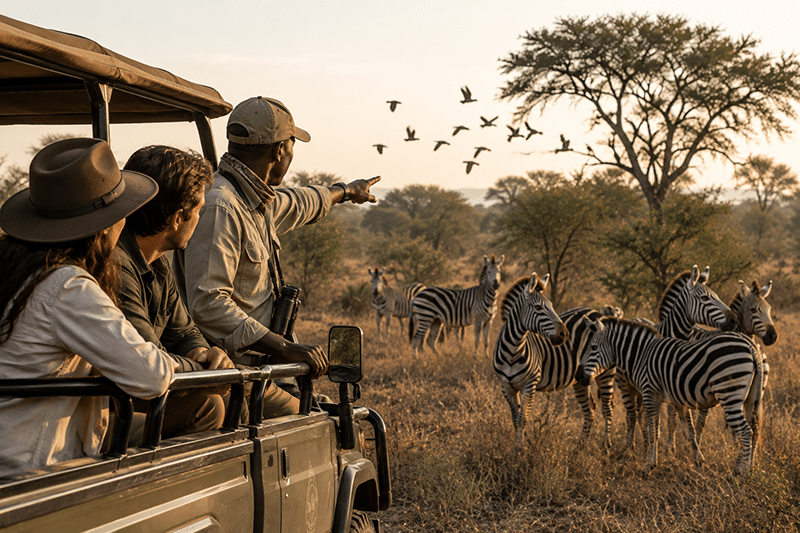
They constantly observe their surroundings from treetops, making them among the first animals to notice movement. A sudden flock taking flight or persistent alarm calls may indicate that a leopard, lion, or other predator is nearby.
Following the birds can sometimes lead to unforgettable sightings.
Tracks and signs complete the picture
Reading the bush involves far more than simply watching animals.
Fresh tracks, broken branches, fresh dung, feeding signs, and even disturbed grass all help guides understand what has happened recently. When combined with sounds and wildlife behaviour, these clues create a remarkably accurate picture of the surrounding environment.
Every detail matters.
Wind plays an important role
The direction of the wind affects both wildlife and safari guides.
Animals rely heavily on their sense of smell to detect danger, while guides consider the wind when approaching wildlife to avoid disturbing them.
A simple change in wind direction can completely alter a game drive.
Animal behaviour tells a story
Wildlife is constantly reacting to its surroundings.
Elephants suddenly becoming alert, giraffes staring in one direction, or zebras gathering tightly together may all indicate that something unusual is happening nearby.
Learning to observe behaviour rather than simply identifying species makes every safari far more engaging.
Guides combine knowledge and experience
Reading the bush is a skill developed over many years.
Professional safari guides combine scientific knowledge, field experience, and careful observation to interpret countless small clues throughout each game drive.
It is this expertise that often turns an ordinary drive into an unforgettable wildlife encounter.
Every ecosystem speaks differently
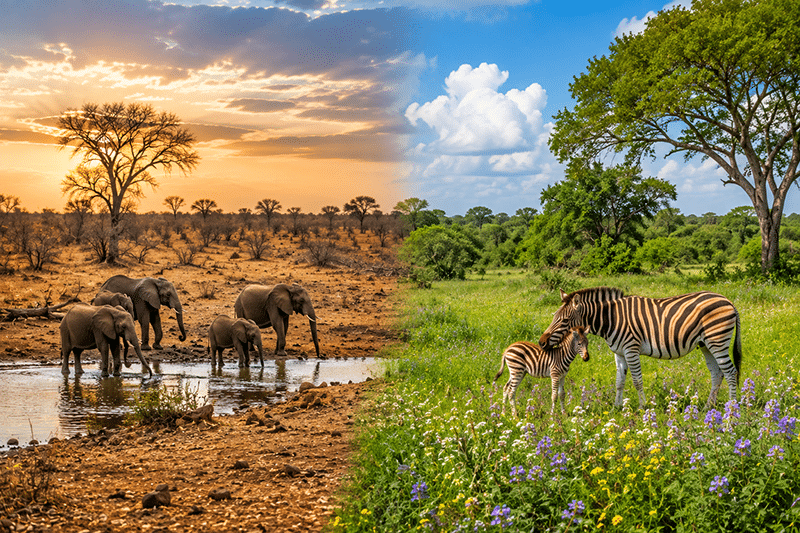
The signs found in a desert, wetland, forest, or savanna are not always the same.
Each habitat has its own wildlife, sounds, vegetation, and natural rhythms. Experienced guides adapt their observations according to the landscape they are exploring.
This is one reason why every safari destination feels unique.
Understanding the bush deepens conservation awareness
Learning how ecosystems function creates a greater appreciation for conservation.
Every animal, bird, insect, and plant contributes to the balance of the environment. Organisations such as World Wildlife Fund continue to support conservation initiatives that protect these complex ecosystems and the remarkable relationships within them.
The more we understand nature, the more we value protecting it.
Conclusion
Reading the African bush is one of safari’s greatest hidden skills. It transforms simple observations into remarkable discoveries and reveals that the wilderness is constantly telling stories to those who know how to listen.
The next time you head out on a game drive, pay attention to the birds, the wind, the tracks, and the behaviour of the animals around you. You may discover that the bush has been speaking all along. If you are ready to experience Africa’s wilderness through the eyes of an expert guide, you can plan your safari through https://awildlifeexpedition.com/contact-us/ and begin your journey.